789p.fan Football Guide to Analyzing Defensive Transitions After Turnovers
When possession is lost, defensive transition begins with spatial denial, not pursuit. The immediate priority is compressing vertical passing lanes while maintaining a compact mid-block shape. Within three seconds of turnover, players must halt forward momentum, identify the nearest pressing trigger, and force subsequent play toward neutral zones. This protocol eliminates chaotic chasing and replaces it with structured containment. Beginners achieve stability by treating the first five seconds as a fixed routine rather than a reactive scramble.
Immediate Response Protocol
The moment a turnover occurs, the defensive system shifts from expansion to compression. The first action belongs to the player closest to the ball carrier. That individual closes distance while maintaining side-on body orientation, limiting the attacker’s vision and forcing lateral movement. Teammates immediately scan their surroundings rather than focusing exclusively on the ball. This visual sweep identifies overlapping runs, supporting triangles, and potential passing outlets.
- Close the nearest angle without committing to a tackle.
- Signal adjacent teammates to drop into compact vertical spacing.
- Designate one player as the temporary anchor who holds central position.
- Force the ball carrier toward the touchline or backward passing lanes.
- Await confirmation that the attacking team has reorganized before stepping up.
This sequence prevents immediate counter-attacks by removing high-percentage passing corridors. Beginners often attempt to recover by running backward toward their own goal, which fractures defensive shape and exposes large spaces behind the midfield line. Instead, forward pressure combined with lateral collapse traps the opposition in low-value zones. The transition phase rewards patience over aggression. Maintaining three-meter gaps between defensive lines ensures coverage against through balls while allowing quick adjustments when the ball moves direction.
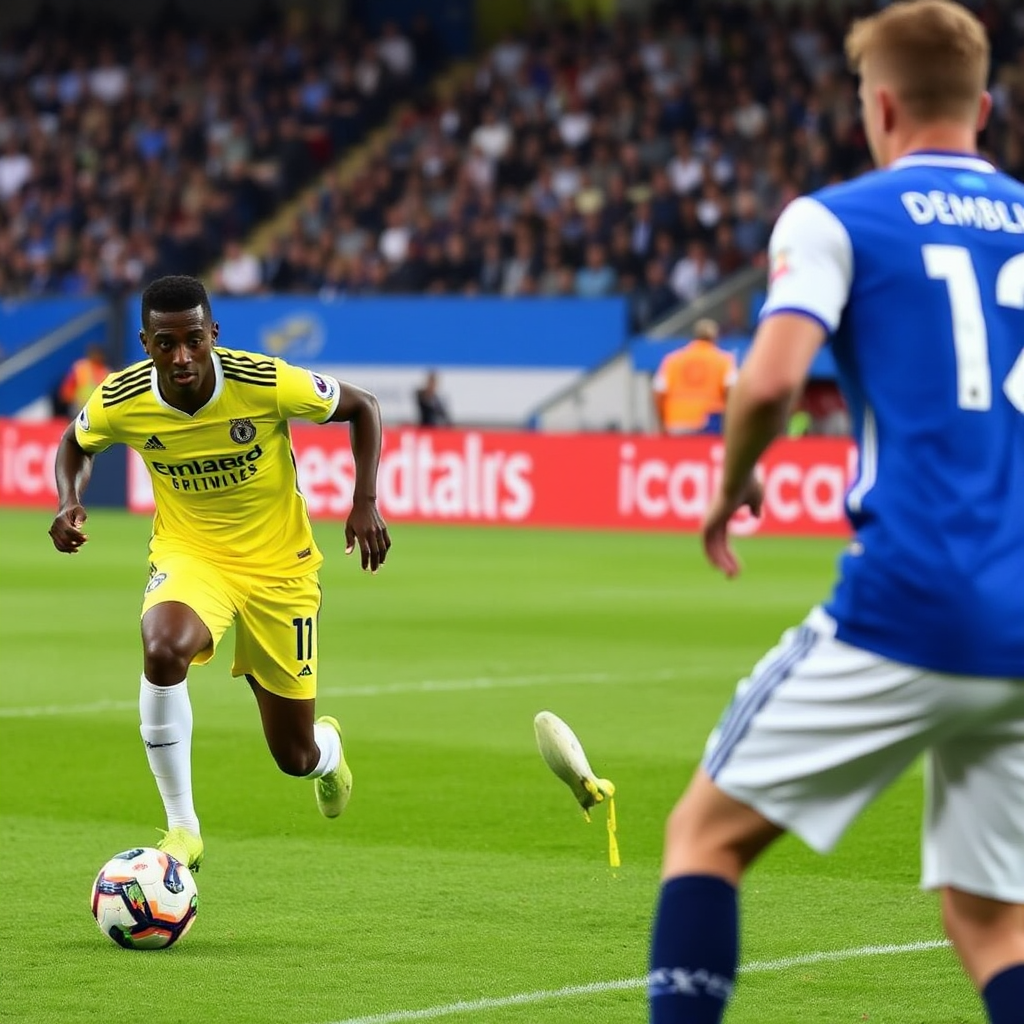 Hình minh hoạ: 789p
Phase-by-Phase Execution Sequence
Defensive transitions operate in distinct temporal blocks. Recognizing these phases allows analysts and players to apply targeted interventions rather than generic instructions. The initial loss triggers a micro-second decision tree that dictates whether the unit presses, drops, or channels the attack. Subsequent phases rely on coordinated shifts that preserve numerical balance.
| Phase | Primary Objective | Key Indicator | Beginner Action |
|---|---|---|---|
| Immediate Loss | Delay forward acceleration | Attacker’s first touch direction | Side-on approach, block straight path |
| Containment Window | Restrict horizontal progression | Support runner positioning | Shift as a unit toward ball side |
| Recovery Run | Restore line integrity | Distance between midfield and defense | Jog diagonally to nearest gap |
| Regroup | Reset pressing triggers | Opponent’s build-up tempo | Communicate shape adjustment |
Each phase requires specific visual cues. During the containment window, defenders monitor the number of attackers ahead of the ball rather than fixating on dribbling patterns. If three opponents occupy the advanced channel, the midfield drops one line to prevent isolation. Conversely, if the attack remains narrow, the defensive unit stays compact centrally. Players accessing structured video libraries via 789p frequently note that consistent pattern recognition reduces reaction time by nearly forty percent compared to instinctive responses. Training these sequences demands repeated small-sided drills where turnovers are manufactured deliberately, forcing participants to execute the protocol under fatigue.

Tactical Rationale Behind Each Movement
Understanding why specific actions occur transforms mechanical repetition into intelligent execution. Spatial compression works because modern football relies on progressive passing angles. When defenders collapse vertically and horizontally, they eliminate diagonal corridors that bypass midfield screening. Forcing play toward the sidelines converts dangerous central exchanges into predictable wide situations where offside traps and numerical overloads become viable.
The temporary anchor role exists to prevent structural collapse. When the ball-side defender engages, the center-back or holding midfielder occupies the space left behind. This positioning ensures that if the initial press fails, the secondary layer intercepts rather than retreats blindly. Recovery runs follow curved trajectories rather than straight sprints. Curved paths minimize exposure to through balls while preserving optimal sprint speed for the next engagement. Straight-line recovery leaves lateral gaps that counters exploit routinely.
Channeling attacks backward reduces velocity and forces offensive reorganization. A backward pass grants the defensive unit additional seconds to restore shape. It also pushes the opposing team deeper into congested areas where pressing becomes easier and mistake probability rises. Beginners who prioritize forward disruption over backward containment consistently concede higher-quality chances. The mathematical advantage lies in reducing expected goals by altering pass probability matrices rather than relying on successful tackles.

Error Containment and Contingency Controls
Mistakes during transition phases are inevitable, particularly during early development stages. The critical distinction lies in how errors are contained. Overcommitting to a press creates immediate numerical deficits. When the initial defender lunges or jumps, the remaining unit must adjust coverage dynamically. Pre-agreed fallback positions prevent reactive scrambling. Defenders practice shifting as a connected block rather than independent actors, which maintains structural integrity even when individual decisions fail.
Misreading press triggers generates sustained pressure from the opposition. Triggers include poor first touches, receiving facing away from goal, and isolated ball carriers without support options. Beginners often trigger prematurely on routine passes or safe circulation. Delaying engagement until the attacker makes a vulnerable decision increases interception probability while minimizing defensive exposure. Coaches utilizing analytical frameworks referenced through 789 P typically establish clear trigger protocols before training sessions to eliminate hesitation during live transitions.
Communication breakdowns compound positional errors. Verbal commands must be concise and directional. Terms like “drop,” “hold,” “step,” and “wide” convey immediate instructions without cognitive delay. Non-verbal signaling complements verbal calls when noise levels interfere. Hand positioning and body rotation communicate shifts faster than shouted commands. Video review markers should track transition success rates rather than isolated tackles. Tracking metrics such as seconds to compact shape, passing lane reduction, and forced backward passes provides objective feedback for correction.

Frequently Asked Questions
How many players should initiate the press after a turnover?
Only one player engages initially. That individual delays progress while teammates arrange containment. Additional presses occur only after the initial engagement forces a predictable reaction.
What happens if the ball is passed backward immediately after losing possession?
The defensive unit does not chase backward. Instead, players shift laterally to maintain compactness and wait for the attacking team to reorganize. Backward circulation grants defensive structure time to reset.
Can beginners practice transition analysis without full squads?
Yes. Small-sided games with mandated turnovers simulate realistic scenarios. Adding conditional rules, such as requiring three sequential passes before shooting, forces defensive repetitions without complex logistics.
How should I measure improvement in transition effectiveness?
Track seconds to shape restoration, percentage of plays forced wide or backward, and opponent shot quality after turnovers. Consistent reduction in these metrics indicates structural adaptation.
- Stop forward momentum within three seconds of turnover
- Approach the ball carrier with side-on body orientation
- Identify the nearest pressing trigger before closing distance
- Drop into compact vertical spacing to eliminate through-ball corridors
- Force progression toward touchlines or backward passing lanes
- Designate a temporary anchor to hold central position during engagement
- Jog along curved trajectories during recovery runs to cover diagonal threats
- Communicate using single-word directional commands
- Review video footage focusing on shape restoration timing rather than tackle success
- Run conditioned small-sided drills that manufacture regular turnovers